


.png)


.jpg)


UN holds emergency debate on primary school bombing in Iran
United Nations (UN) holds emergency debate on Thursday to discuss a strike on a primary school in Iran which allegedly killed 168 people, mostly children

27 March 2026, 1:12pm
Eva Brannon
Eva Brannon
4 min read
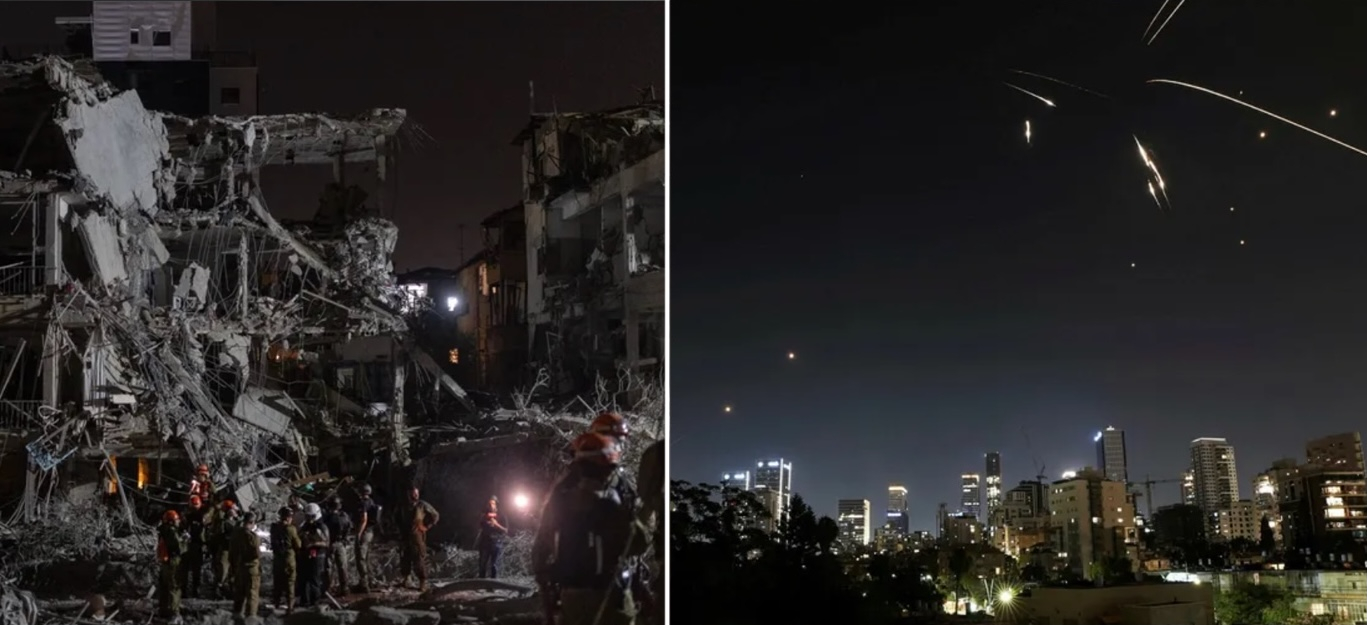
Death toll continues to rise as conflict enters its 28th day

On Thursday, the United Nations (UN) Human Rights Council held an emergency debate on the strike on a primary school in Iran at the beginning of the war in the Middle East. Iranian authorities say 168 people were killed, mostly children.
UN human rights chief Volker Türk said it sparked "visceral horror,” also calling US-Israeli strikes on civilian infrastructure “reckless beyond comprehension.”
Iran foreign affairs minister Abbas Aragchi called it a “war crime,” describing the conflict as an "illegal war imposed by two bullying nuclear armed regimes" when appearing at the UN.
Israel’s military has previously said that it was not aware of any operations in the area. The United States (US) has not accepted responsibility, but has previously said it is investigating.
On day 28 of the conflict, the Israeli-American war on Iran has brought the total death toll to over 3,000 along with around 33,000 injured as the human cost of the conflict continues to rise.
UNICEF has warned of the toll Israel’s invasion of Lebanon, in their offensive against Hezbollah, is having on children, with over 370,000 children being forced from their homes.
The organisation’s representative in Lebanon, Marcoluigi Corsi, said Israel’s intensified attacks on the country this month have killed at least 121 children and injured 399 others.
US President Donald Trump has delayed planned attacks on Iran’s energy infrastructure by 10 more days until April 6, saying that peace talks are going “very well,” as Iranian officials describe a US proposal as “one-sided and unfair.”
The situation remains cloudy, with both sides contradicting each other and strikes continuing across the Middle East. Pakistan has said it is relaying messages between Washington and Iran in an effort of diplomacy to end the war, pushing for possible in-person talks as soon as possible.
The Strait of Hormuz remains closed, as Iran’s Islamic Revolutionary Guard Corps (IRGC) claimed that they turned back three vessels that were trying to pass through.
In a statement by the IRGC, it was said that "The passage of any vessel to and from ports belonging to allies and supporters of the US and Israel, to any destination and via any corridor, is prohibited.”
Iran has accepted requests for vessels to move through the strait from countries such as China, Russia, Pakistan, Iraq, and India, according to Iranian Foreign Minister Abbas Aragchi.
Earlier this week, Trump claimed that Iran allowed "10 boats of oil" as a “present” to pass through the Strait of Hormuz.
"I guess they were right, and they were real, and I think they were Pakistani-flagged... it ended up being 10 boats," Trump said during a cabinet meeting at the White House yesterday.
After the BBC checked through publicly available ship-tracking data to see which vessels crossed the Strait on the period Trump mentioned, it identified five vessels carrying oil through the Strait, none of which were Pakistan-flagged. Another five ships passed through the strait, none of which were carrying oil.
This comes after Trump threatened to “obliterate” Iranian power plants if the Strait of Hormuz was not reopened within the following two days, “starting with the biggest one first,” he said on Truth Social.
As the deadline neared and the Strait was not opened, Trump claimed that members of his administration were negotiating with Iran, saying both sides had “very good and productive” talks to end the war and that Iran wanted to "make a deal so badly".
In response, Iran’s parliamentary speaker Mohammad Bagher Ghalibaf, denied Trump’s claims about negotiations, calling them “fake news” being “used to manipulate financial and oil markets”.
Iran rejected a 15-point peace proposal from the United States, calling its demands "excessive" and set out five conditions of its own under which it would agree to end the war.
Trump insisted that negotiations are underway with Iran, saying "they're afraid to say it because they figure they'll be killed by their own people". He added "They're also afraid they'll be killed by us.”
The ambiguous situation has left many wondering, how many more will die before an agreement is reached?

Eva Brannon is a staff reporter at MaltaToday