The four pillars of education
These four pillars form an integrated whole, complementing and strengthening each other. Education is, after all, a total experience.

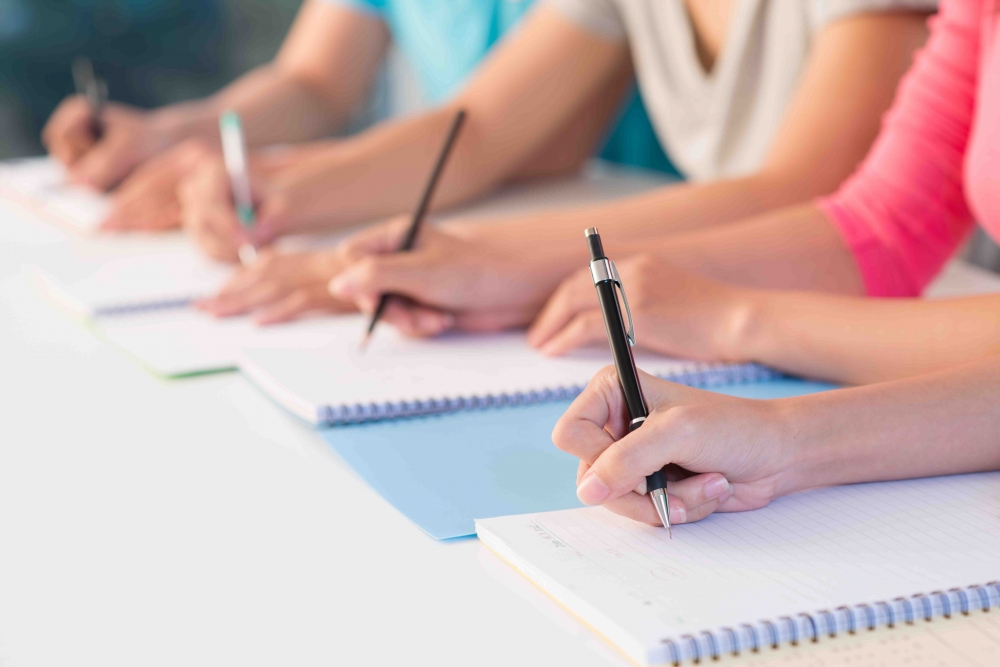

Most of our present education is exam-orientated. It is about information and testing and exams and we need to work hard to bring about changes to this test-based accountability in education. We are actively working hard to review this mentality and we are basing our policies on the four pillars of education – Learning to Know; Learning to Do; Learning to Live Together and Learning to Be.
Our policies are inspired by the UNESCO report ‘Learning: The Treasure Within’. Formal education systems tend to emphasise the acquisition of knowledge to the detriment of other types of learning, but it is vital to conceive education in a more encompassing fashion. Such a vision should inform and guide future educational reforms and policy, in relation both to content and to methods. These four pillars form an integrated whole, complementing and strengthening each other. Education is, after all, a total experience.
Learning to know
Learning to know lays the foundations of learning throughout life.
This pillar refers to the basic knowledge that we need to be able to understand our environment and to live in dignity.
It is also about arousing curiosity, allowing us to experience the pleasures of research and discovery.
It puts us face to face with the challenge of combining a sufficiently broad education with the in-depth investigation of selected subjects. Naturally, learning to know presupposes that we develop the powers of concentration, memory, and thought. In short, that we learn to learn.
Learning to do
Learning to do refers to the acquisition of practical skills, but also to an aptitude for teamwork and initiative, and a readiness to take risks. As such, this pillar is about the competence of putting what we have learned into practice so as to act creatively on our environment. A variety of situations, often unforeseeable, is bound to arise. When this happens, learning to do enables us to turn our knowledge into effective innovations.
Learning to live together
Learning to live together is the pillar UNESCO emphasizes more than any other. It refers first of all to developing an understanding of others through dialogue – leading to empathy, respect, and appreciation. Yet if we are to understand others, we must first know ourselves. Learning to live together is thus also about recognising our growing interdependence, about experiencing shared purposes, and about implementing common projects and a joint future. Only then will it be possible to manage inevitable conflicts in a peaceful way.
Learning to be
Learning to be is founded on the fundamental principle that education needs to contribute to the all-round development of each individual. This pillar deals with the broadening of care for each aspect of our personality. It deals with giving us the freedom of thought, feeling, and imagination that we need to act more independently, with more insight, more critically, and more responsibly. Learning to be helps develop a person’s potential: memory, reasoning, aesthetic sense, physical capacities and communication skills.
The concept of learning throughout life is the key that gives us access to the twenty-first century.
It goes beyond the traditional distinction between initial and continuing education. It links up with another concept often put forward, that of the learning society, in which everything affords an opportunity of learning and fulfilling one’s potential. Continuing education is seen as going far beyond what is already practised. It should open up opportunities for learning for all and satisfy the desire for knowledge and the desire to surpass ourselves. In short, ‘learning throughout life’ must take advantage of all the opportunities offered by society.


-

Europe
Peter Agius wants ‘unfair’ EU emissions charges on Malta transport halved
-

National
Caruana: New taxes possible, but VAT, income tax, and social security untouched
-

Court & Police
Prison guard accused of raping 14-year-old former ‘girlfriend’ granted bail
More in News-

Business News
Central Bank Governor participates in Mediterranean Central Banks Conference in Tarragona
-
.png)
Tech & Gaming
2027 iGaming Trends Report by SOFTSWISS about AI, technology and regulation
-

Business News
CrediaBank completes acquisition of majority stake in Pantelakis Securities
More in Business-
.jpg)
Tennis
Young Maltese athlete pursues tennis development in France
-

Other Sports
Micallef signs off GB3 in style at Donington Park
More in Sports-

Art
Mark Sagona presents Crossings, a new exploration of the beyond
-

Books
Malta-based author expands Hollywood thriller series with two new titles
-

Theatre & Dance
From Malta to Europe: Steve Hili takes Manaconda international
More in Arts-

Opinions
The subsidy trap: Afraid to live without it
-

Opinions
My imaginary script for Robert
-

Editorial
Morphine, the super bonus and political honesty
More in Comment-

Restaurants
Tapea: Where Spain comes alive in St Julian's
-

Articles
Premju Emanuele Luigi Galizia returns to celebrate Malta’s best in architecture
-

Restaurants
MasterChef Thailand’s Ian Kittichai brings his famous take on Thai cuisine to Valletta
More in Magazines