


.jpg)


Votes, money, and the election we are not really having
With the election campaign entering its third week, Malta’s political system is analysed through the critical lens of an economist trying to understand the forces that shape it

17 May 2026, 7:00am
JP Fabri
JP Fabri
10 min read

PN billboard (left) and PL billboard (right) emphasising the respective campaign slogans

With Malta’s general election campaign in full swing, the country finds itself at a moment that is politically familiar yet strategically unprecedented.
Familiar because the rhythms of the campaign are already recognisable. Within days of the election being called, the public space filled with proposals, tax measures, subsidies, grants, social incentives, and targeted pledges aimed at different voter segments. Familiar because the two dominant political parties once again moved quickly into campaign mode, sharpening contrasts and mobilising their machinery.
But unprecedented because this election is unfolding in a world that looks very different from the one Malta became economically comfortable operating in over the past decade. War in the Middle East is affecting energy markets. Europe is facing increasing concerns around fuel supply, logistics, and strategic resilience. Supply chains are becoming more regionalised. Inflation, while lower than its peak, remains structurally embedded in parts of the global economy. Interest rates are no longer near zero. Economic shocks, which once felt exceptional, are becoming part of the operating environment.
Economic realities
For a small island economy like Malta, deeply dependent on imported energy, imported labour, tourism connectivity, and external market confidence, these developments are not abstract geopolitical events. They are strategic economic realities. Yet if one listens to the tone of the campaign so far, one could easily believe that Malta exists in a far more insulated environment.
Votes create legitimacy, but money sustains machinery. Votes grant mandates, but money amplifies voice
Much of the political conversation has quickly shifted toward immediate benefits, purchasing power, sectoral measures, and what one commentator rightly described as a spending contest. That observation should not be dismissed as routine election criticism. It should invite a deeper question about the political system itself. Why do our elections often drift toward short-term transactional politics even when the world around us is becoming structurally more fragile?
To answer that question, it is useful to step away from ideology and look instead at politics through the lens of strategic analysis.
Porter’s Five Forces
Michael Porter, the Harvard economist and one of the world’s leading thinkers on competitive strategy, transformed how organisations understand industries through his Five Forces framework. Porter’s insight was simple but powerful. Industries do not simply produce outcomes because of the talent or intentions of individual players. They produce outcomes because of the structure of the system itself. Competitive rivalry, barriers to entry, supplier power, customer behaviour, substitutes, and external pressures all shape how industries evolve over time.
Years later, Katherine Gehl took Porter’s framework and applied it to democratic systems. Her argument was equally provocative. If political systems repeatedly produce polarisation, short-termism, declining trust, weak accountability, and poor policy outcomes, the problem may not lie solely with individual politicians or parties. The problem may lie in the incentives embedded within the political industry itself. This framework becomes particularly relevant when applied to Malta.

Robert Abela at a Labour mass meeting
The following analysis argues that Malta’s political system behaves very much like a concentrated industry. It is shaped by powerful incumbents, high barriers to entry, tightly controlled organisational structures, inherited loyalties, financial dependencies, and overlapping social, economic, and political networks. It also introduces a particularly important concept, one that perhaps explains more about Maltese politics than any campaign slogan ever could—Malta’s political industry operates with two currencies. The first currency is votes. Votes are the visible currency of democracy. They are what citizens exchange for representation, legitimacy, and political power. They are what determine who governs, who shapes institutions, and who controls the direction of public policy.
But beneath that visible democratic currency lies another, quieter currency—money. Campaigns are expensive. Political organisation is expensive. Candidate branding, media campaigns, digital outreach, district mobilisation, events, logistics, and internal party operations all require financial resources. This creates a reality that is often under-discussed in public life. Political competition is not simply about ideas. It is also about access to funding, networks of influence, organisational machinery, and economic support structures. In a small country like Malta, where business, politics, media, and social relationships often overlap, the interaction between these two currencies becomes particularly significant. Votes create legitimacy, but money sustains machinery. Votes grant mandates, but money amplifies voice. This does not automatically imply corruption or undue influence. But it does create incentives. And political systems, like markets, respond to incentives.
When one begins to analyse Malta’s current election through this lens, many of the patterns become easier to understand.
FORCE ONE: Rivalry between existing competitors
The first is the nature of rivalry among existing competitors. Malta’s political marketplace remains overwhelmingly dominated by two major players: The Labour Party and the Nationalist Party. Over decades, both have built deep emotional loyalty, sophisticated grassroots machinery, strong district-level structures, financial capacity, media ecosystems, and organisational depth that few political challengers can realistically match. This has undoubtedly created political stability. But concentrated industries often create another outcome as well—zero-sum competition. In such systems, the objective is often less about redefining the market and more about protecting market share.

Alex Borg embracing supporters at a PN meeting
This is precisely what appears to be happening in this election. The campaign began in the context of genuine global uncertainty. Concerns around war, energy prices, and fuel supply chains should logically have created space for a national conversation about resilience, productivity, fiscal buffers, strategic planning, and the implementation of Vision 2050. Instead, much of the early campaign quickly gravitated toward competitive proposals designed to appeal to immediate voter sentiment. One party announces a measure, the other responds. One side targets a demographic, the other seeks to neutralise it. One side frames relief, the other frames reassurance. The logic of rivalry begins to dominate the logic of strategy.
This helps explain why some of the country’s most structural issues remain under-discussed. Questions around Malta’s productivity gap, demographic pressures, labour market dependency, institutional reform, housing affordability, infrastructure stress, governance quality, environmental resilience, and long-term economic competitiveness often struggle to compete with more politically visible proposals. This is not because parties do not understand these issues. It is because the structure of rivalry often rewards immediacy over complexity.
FORCE TWO: Bargaining power of suppliers
The second force is the bargaining power of the political parties themselves. In Malta, political parties are not simply campaign organisations. They are powerful institutions with deep organisational memory, candidate pipelines, media influence, internal hierarchies, and the ability to shape both political narratives and career progression.
They influence who rises, who gets selected, what messages dominate, and which policy priorities receive visibility. In such systems, internal party incentives can sometimes become stronger than national policy incentives. Candidates often need to appeal not only to voters, but to internal structures, district interests, donor networks, and party leadership. This naturally affects behaviour.
FORCE THREE: Barriers to entry
At the same time, barriers to entry remain high. This is where the third force becomes important. In healthy industries, new entrants force incumbents to improve. They introduce innovation, challenge assumptions, and create competitive pressure. In Malta, however, entering politics remains extraordinarily difficult. The electoral system, strong inherited party loyalties, campaign financing requirements, media access, and cultural tribalism create structural barriers that few smaller parties can overcome.
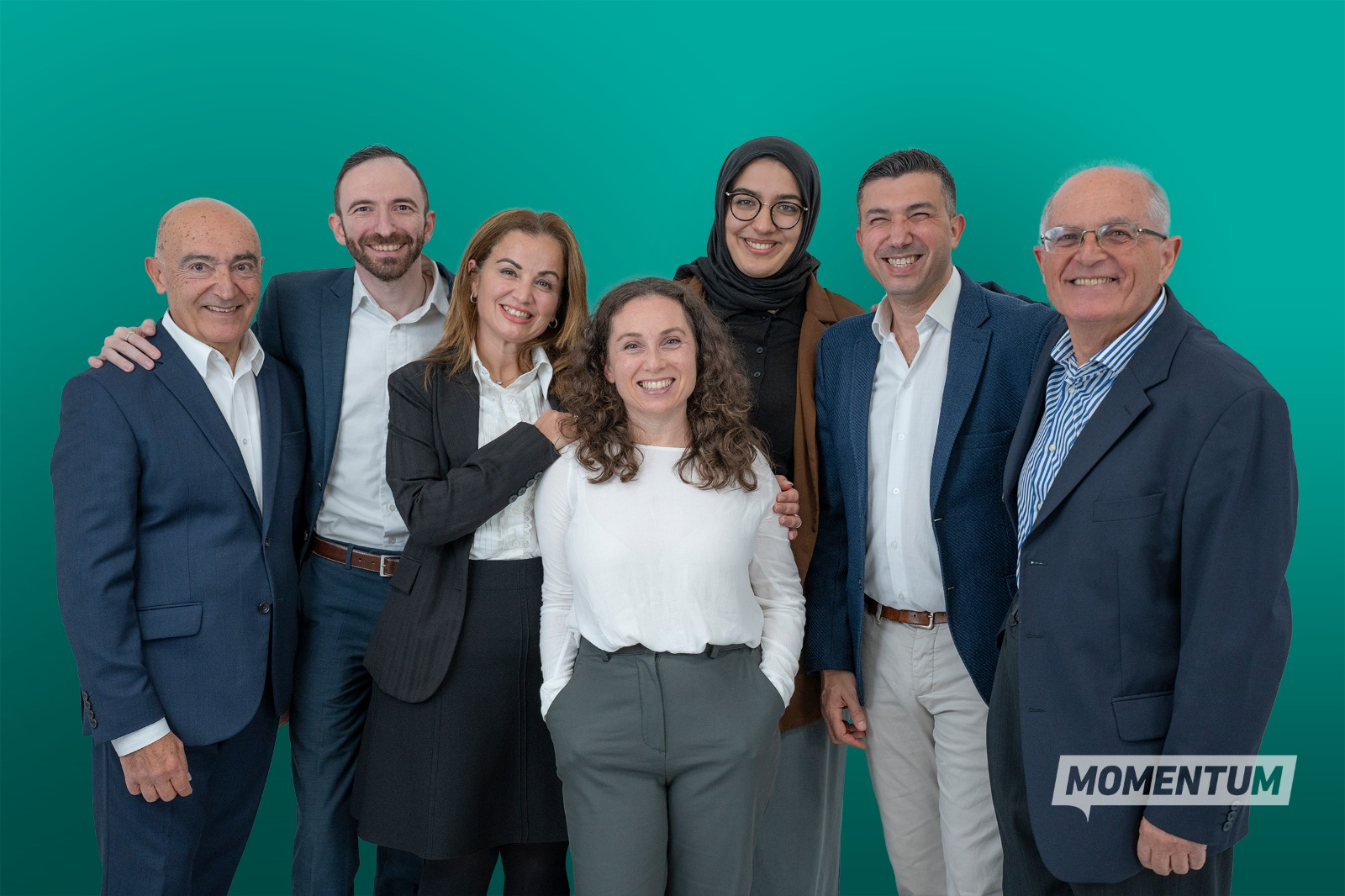
The newest mainstream political party on the block, Momentum
Yet this election does offer interesting signals. Smaller political forces such as Momentum and ADPD are attempting to challenge the traditional duopoly. Their electoral success remains uncertain, but their strategic importance lies elsewhere. They introduce issues that larger parties often avoid. They force uncomfortable conversations around governance, institutional reform, environmental sustainability, democratic accountability, and intergenerational fairness. Whether they win seats or not, they increase competitive pressure. And in concentrated industries, pressure from new entrants often matters long before market share changes.
FORCE FOUR: bargaining power of buyers
The fourth force concerns the bargaining power of voters. In theory, voters are the ultimate source of democratic power. But in practice, voter bargaining power depends heavily on the quality of choice available. In Malta, political identity remains deeply social, emotional, and often inherited.
Many voters may be dissatisfied with the status quo, yet still feel structurally locked into one of the two dominant political brands. Others may sympathise with alternative parties but fear their vote will not translate into representation. This weakens the corrective function of competition. When voters feel trapped between two dominant players, elections can drift toward transactional politics, where short-term benefits become more politically effective than long-term institutional reform.

Political identity remains deeply social, emotional and often inher
This brings us to perhaps the most important economic concept shaping this campaign—the illusion of the free lunch. Economics teaches us a simple truth. There is no free lunch. Every subsidy carries a fiscal cost. Every tax cut reduces revenue unless offset by productivity or growth. Every spending promise affects future budget flexibility. Every policy choice has an opportunity cost. Yet elections often create the illusion that governments can continuously promise more without openly discussing trade-offs. This is particularly dangerous for a country like Malta, which currently enjoys relatively strong public finances, healthy debt dynamics, and fiscal space, but remains exposed to external shocks.
This is why the interventions by the Malta Chamber and Malta Employers during this campaign matter. Their warning that some proposals risk undermining competitiveness, productivity, and the principles embedded in Vision 2050 should not be viewed as business lobbying. It should be understood as a structural warning. Malta’s economy has performed well, but its next phase of development requires a shift from volume to value, from expansion to productivity, from short-term incentives to long-term competitiveness.
FORCE FIVE: External stakeholders
Malta does not operate in isolation. The European Union, global capital markets, energy flows, migration patterns, international institutions, and geopolitical developments all influence domestic outcomes. The war, fuel concerns, aviation risks, and supply chain pressures currently affecting Europe are not distant events. They shape tourism, inflation, fiscal policy, and investor confidence.

Photo: US Central Command
They influence the room for manoeuvre that governments have. And yet, this election often feels disconnected from those realities. This is perhaps the deeper concern. Malta has Vision 2050. It has the beginnings of a national framework built around resilience, quality of life, sustainability, and competitiveness. What it risks lacking is alignment between that vision and the incentives of its political industry.
Not simply a question of who wins
The real question in this election, therefore, is not simply who wins. The deeper question is whether Malta’s political system is ready to evolve. Whether it can move beyond a model dominated by rivalry, machinery, transactional promises, and dual currencies. Whether votes can once again become more powerful than money. Whether ideas can become more powerful than political infrastructure. Whether long-term aspiration can become more powerful than short-term distribution.
Because in the end, elections do not simply choose governments. They reveal systems. And perhaps what this election is revealing most clearly is that Malta’s greatest challenge may no longer be the economic system alone. It may be the political architecture through which we choose how that growth is shaped.

Perhaps this is where Malta’s next democratic evolution lies. Not simply in better campaigns, sharper proposals, or more effective political messaging, but in creating stronger independent institutions that elevate the national conversation beyond the rhythms of electoral cycles. Small states, perhaps more than any others, need spaces where long-term thinking can flourish, where evidence can challenge ideology, and where policy can be tested free from partisan reflexes or political tribalism.
Malta has no shortage of talent, expertise, or ambition. What it arguably lacks is a truly independent policy platform that consistently brings together economists, business leaders, academics, social thinkers, environmental experts, and civic voices to interrogate the country’s biggest challenges with intellectual honesty and without political blinkers. A national think tank, independent in governance and trusted in its credibility, could help bridge the widening gap between political competition and strategic statecraft.
Because if Vision 2050 is to become more than a document, Malta needs institutions that do not merely react to elections, but help shape the quality of choices that elections produce.

JP Fabri is an economist