A tragedy of incentives: Hotels, supermarkets and malls
The cranes are not the problem. What they are building for is

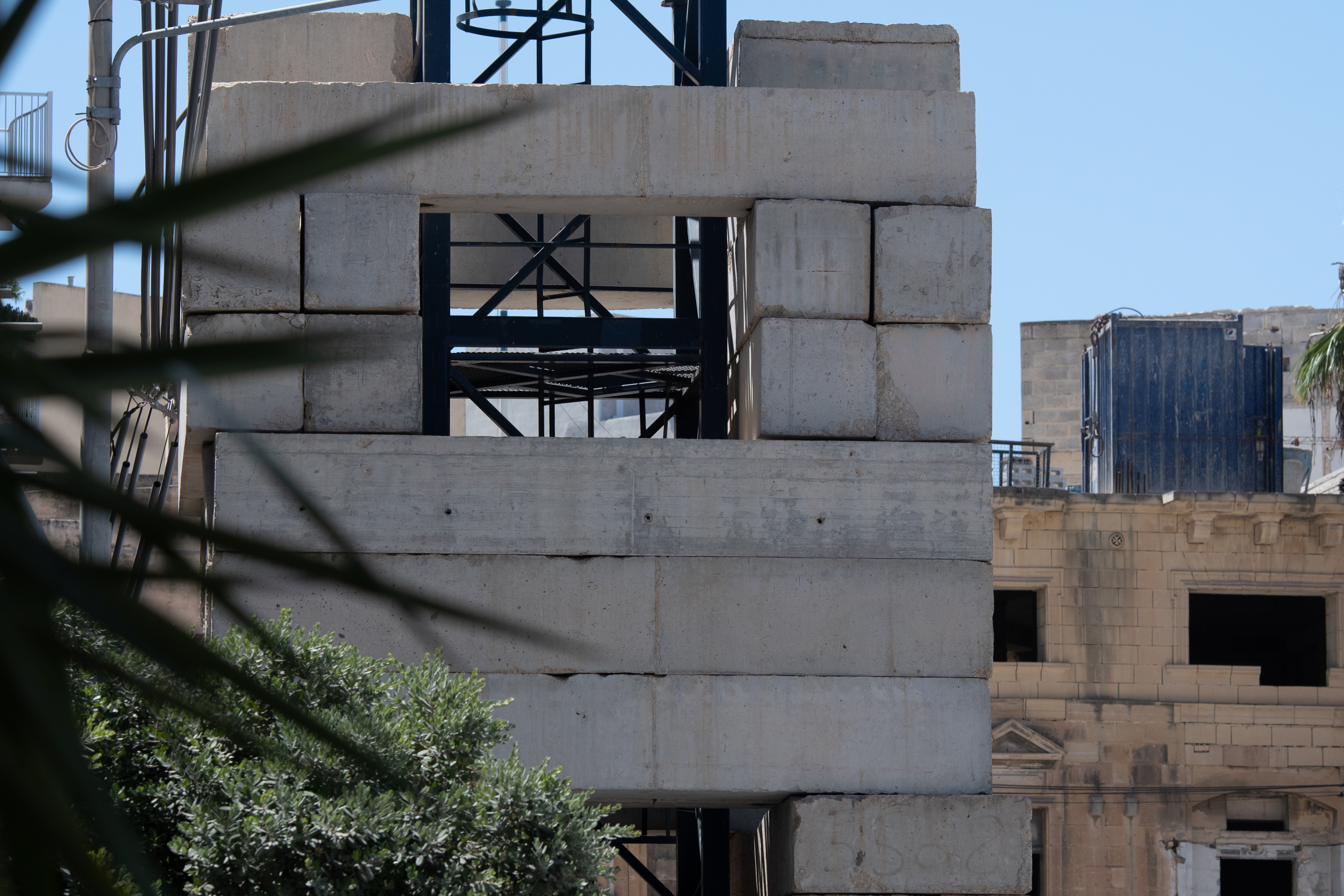

Last week’s brilliant analysis by James Debono in MaltaToday showed how Malta has approved 5,235 new hotel and guesthouse rooms since the start of 2024. It represents a 44% increase in hotel stock and a doubling of guesthouses in barely 30 months.
The natural response is to treat this as a tourism story; a question of overcrowding, occupancy, and whether the island has too many beds. But the room count is a symptom, not the disease. The same impulse that fills St Julian’s with hotels is filling roads with supermarkets and retail parks. What we are watching is not a tourism boom. It is the visible surface of a return structure that systematically rewards rent-extraction over production, and channels the nation’s capital into land rather than into the things that actually make an economy richer.
The most visible exhibit
Tourism is where the pattern is easiest to see, so it is worth a moment. Malta received just over four million inbound tourists in 2025, up 12.9%, spending an estimated €3,904.4 million. Against that, a 44% expansion in hotel capacity is not a response to demand, it is a wager on it. When supply outruns the high-value demand it is meant to capture, the surplus shows up as discounting and a scramble for the same guest. The clustering confirms it: St Julian’s and Sliema alone absorb 38% of all new rooms, piling capacity into the corridor already most congested. Even the industry sees the cliff edge, with hoteliers themselves warning of a possible 70% increase in rooms and the oversupply that implies. It is evident that the building is being driven by something other than tourism fundamentals.
That something is the real point, and it does not stop at hotels.
The same logic, everywhere
It is interesting and telling to watch how capital behaves beyond beds. The supermarket race is the identical phenomenon wearing different signage. A fourth full-size grocery store in a catchment that comfortably supported three does not expand the amount Maltese households eat. Domestic consumption is a hard ceiling, set by population and income. The marginal supermarket simply redistributes a fixed pool of spending across more floor space, more car parks, more land taken out of any productive use. Retail parks tell the same story. The marginal mall is not meeting unmet demand, it is cannibalising the older centre, and ultimately the mall built five years earlier, while consuming capital, labour and scarce land in the process.
This is the version of cannibalisation that is harder to disguise than the tourism one, precisely because there is no foreign-demand alibi. A hotel can at least claim to be chasing new visitors from abroad. A supermarket cannot pretend it is importing new appetites. It is competing for a domestic wallet that is not growing fast enough to justify the concrete being poured to chase it.
The wholesale and retail trade sector now accounts for roughly 15% of gross value added; add construction and real estate and the land-backed, domestically-oriented bloc approaches a quarter of the entire economy. An economy can have only so much of its productive surface paved over with rooms and aisles before the composition itself becomes the constraint.
Why capital keeps choosing land
None of this is irrational at the level of the individual decision. The developer converting a townhouse into a guesthouse, the operator opening the fourth supermarket, the fund parking money in a retail park; each is responding sensibly to the incentives in front of them. The incentives are the problem. In Malta, the safest, most liquid, most reliably appreciating asset is a land-backed slab of masonry with a domestic income stream attached. Against a near-guaranteed property uplift, the productivity-raising alternatives—capitalising a scale-up, financing equipment, backing a tradable-sector venture—look risky, illiquid and slow.
So capital does what capital does—it flows to the best risk-adjusted return. Gross fixed capital formation across the whole economy ran at roughly €1.08 billion in the first quarter of 2026, and a rising share of it is going into bricks rather than into anything that lifts output per worker. This is the quiet tragedy of a distorted return structure. It is individually rational and collectively impoverishing. Every euro chasing a guaranteed rent is a euro not financing the knowledge-intensive, export-facing activity a mature economy depends on. The country ends up richer in floor space and poorer in capability; accumulating assets that extract value from a fixed domestic base rather than create new value to sell to the world.
The deeper repair
The new tourism caps—200 rooms for hotels, 20 for guesthouses, with height-breaching projects blocked—are welcome, but they treat one symptom of a systemic condition. They limit how many hotel rooms get built; they do nothing about the next supermarket, and nothing about the underlying incentive that makes land the default destination for savings. Capping the visible excess in one sector simply leaves the capital to find the next land-backed outlet.
The structural repair is to change the relative return; to make productive investment as financeable as a guesthouse. This is the proper role of a national development bank, and the case for sharpening the Malta Development Bank’s mandate is precisely this. Its job is not to compete with commercial lenders on easy property deals, but to correct the market failure by pricing in the public returns private capital ignores—patient growth finance for tradable SMEs, co-investment that de-risks innovation and the green transition, an additionality test that asks not merely whether a project is permissible but whether the capital behind it would do more good elsewhere. The planning system can only ask the first question; a development institution can ask the second, and steer credit accordingly.
But the bank is one instrument, not the whole answer. The return structure is shaped by tax treatment that favours property, by a permitting regime that makes land the path of least resistance, and by a chronic underpricing of the congestion and infrastructure costs that each new development externalises onto everyone else. Until those are addressed, capital will keep choosing rent over production, and we will keep building an economy that is magnificent at extracting value from itself and increasingly unable to create any.
The cranes are not the problem. What they are building for is.


-

National
Malta Miegħek: 2027 Budget theme announced
-

National
Macron threatened Malta over refusal to join Libya naval blockade, Evarist Bartolo claims
-

Court & Police
Tourist arrested aboard plane after Paceville cyclist attack, court hears
More in News-

Business News
MFSA highlights industry-wide shortcomings in pension member communications
-

Business News
CBM Governor addresses annual conference of the International Network of Financial Services Ombudsman Schemes
-

Business News
Revolut reports disruption affecting multiple services
More in Business-
.jpg)
Tennis
Young Maltese athlete pursues tennis development in France
-

Other Sports
Micallef signs off GB3 in style at Donington Park
More in Sports-

Theatre & Dance
Għadna Żgħar: A story of friendship, growing up and finding your way
-

Art
Polykosmik: Exploring cultural heritage through digital innovation at MUŻA
-

Books
Malta Book Festival theatre shows bring Maltese books for young readers to life
More in Arts-

Opinions
The chronicles of a Maltese consumer: Five years on
-

Opinions
Affordable housing: Turning evidence into action
-

Opinions
Post mortem: The demise of Integrity
More in Comment-

Restaurants
IBER&CO & CASA PEPA: Two ways to love Spain
-

Restaurants
Tapea: Where Spain comes alive in St Julian's
-

Articles
Premju Emanuele Luigi Galizia returns to celebrate Malta’s best in architecture
More in Magazines