
.png)


.jpg)


.png)

.jpg)


.jpg)


Planning appeals: Public wins in 41% of cases
Property-data platform Pedament analysis finds appeal times are already approaching some of the deadlines proposed under the new law suspending permits during appeals

8 October 2026, 9:33am
James Debono
James Debono
5 min read
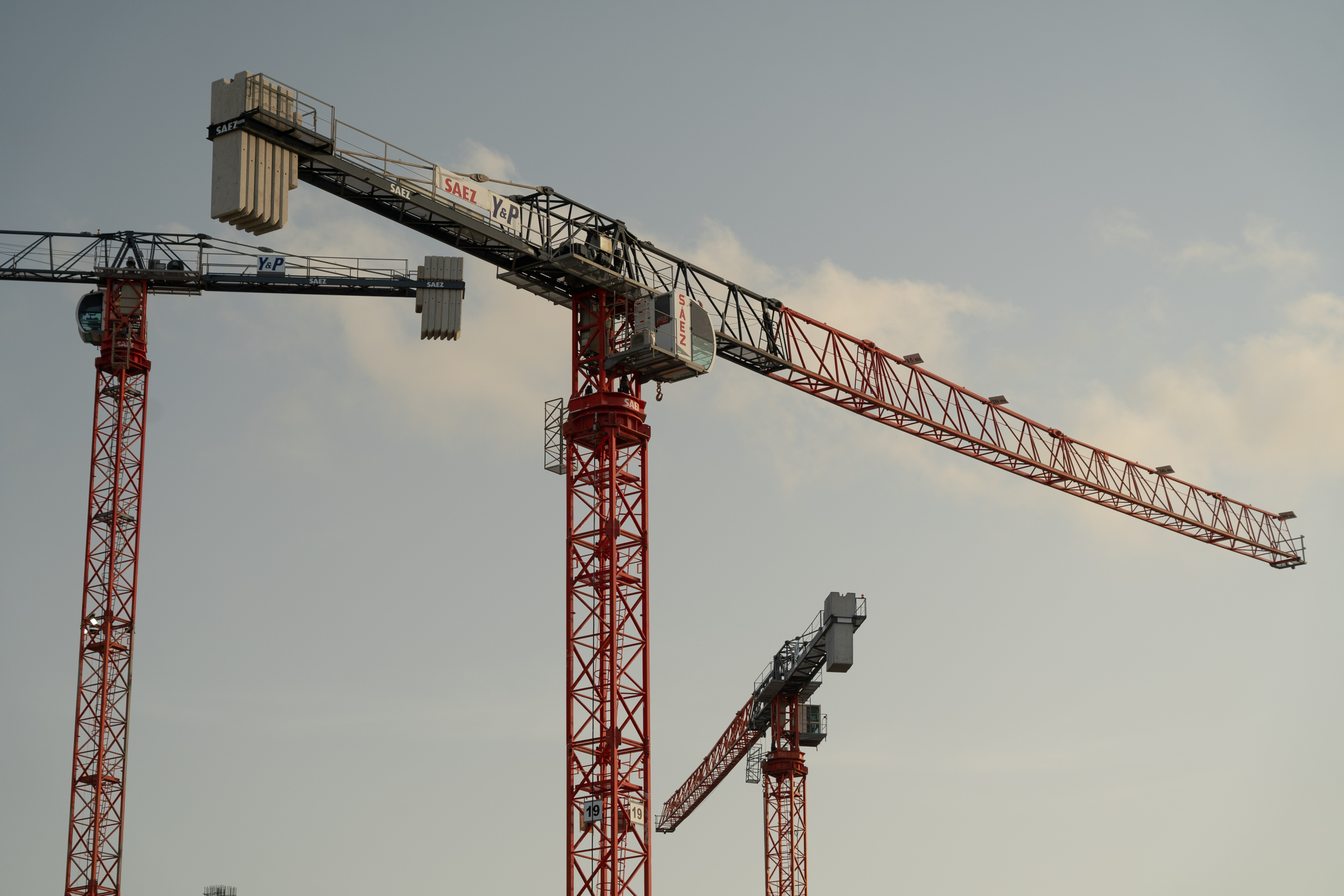
Cranes in Malta (Photo: James Bianchi/MaltaToday)

Third-party planning appeals were upheld either fully or partly in 238 of 580 final rulings between 2021 and 2025, giving them a 41% success rate, according to a new analysis of Malta’s planning appeals system.
Third-party appeals are brought by parties other than the applicant, including environmental NGOs, residents, neighbours and other objectors.
The analysis by Pedament, a Malta property-data platform that also provides planning-register data and analysis, covers 9,343 planning appeals registered since 2000.
Third-party appeals remain a small share
The findings provide a different picture from claims by some developers that planning appeals are routinely vexatious and used to delay or obstruct development.
There were 138 third-party appeals lodged in 2025, a record number and equivalent to 33% of all planning appeals that year, up from 21% in 2014.
But the number of approved developments that actually faced a third-party appeal remained relatively small.
Pedament found that 127 of the 7,203 permits granted in 2025 attracted a third-party appeal, equivalent to 1.8%.
Of the 138 appeals lodged, 133 concerned approvals, covering 120 applications. Four were not against approvals and one could not be classified.
At the same time, applicants themselves have become less likely to challenge refusals. The share of planning refusals that were appealed fell from 58% in 2014 to 43% in 2025.
The balance between the two types of appeal has therefore shifted considerably over the past decade.
Public challenges increasingly successful
Pedament found that third-party appellants had a 41% success rate between 2021 and 2025, compared with 38% for developers or owners appealing a refusal.
The gap has widened in recent years. The public side outperformed applicants appealing refusals in every year from 2023 onwards.
In 2025, 140 third-party appeals reached a decision classified as a final ruling. Eleven were fully upheld, while 45 were partly upheld and 56 were dismissed. The remaining cases fell into procedural or other categories.
The increase in successful third-party appeals has largely been driven by partial victories. In 2014, two out of every five successful third-party appeals were partial wins. In contrast in 2025, of the 140 third-party appeals 45 were partly upheld and 56 were dismissed. Only 11were fully upheld.
Appeals cluster in development hotspots
Third-party appeals are concentrated in particular localities.
Between 2020 and 2025, Sliema recorded 70 third-party appeals, followed by St Julian’s and St Paul’s Bay with 32 each and Naxxar with 24.
When the number of appeals is compared with the number of permits granted, Sliema recorded 71 third-party appeals per 1,000 permits. Lija followed with 60, while Għargħur and Iklin recorded 59 each. Mdina also recorded 60, although this was based on only three appeals.
The finding points to a strong overlap between areas where developers challenge refusals and areas where third parties challenge approvals.
Tribunal already moving faster
The figures on appeal duration are particularly relevant to the government’s proposed reforms.
The proposed legislation would automatically suspend a development permit when an appeal is lodged, require the tribunal to hold a first sitting within 30 days and decide an appeal within six months. A subsequent appeal to the Court of Appeal would have to be decided within four months, with a possible two-month extension.
The tribunal has already substantially reduced the time it takes to decide appeals.
The median appeal decided in 2025 took 7.8 months from the first hearing, compared with 18.2 months in 2020. Measured from the original Planning Authority decision, the median fell from 21.9 months to 10.1 months.
Among appeals first heard in the second half of 2025, 72% were decided within six months. For appeals first heard in the first half of 2019, only 8% had been decided within that period.
The improvement has continued into 2026. The median time from first hearing to decision was 5.1 months in the first half of the year, although Pedament cautions that this is a smaller sample and is not directly comparable with a full-year figure.
The six-month target is therefore increasingly close to current performance, although it would still require a further reduction in the median time between the Planning Authority decision and the final tribunal ruling.
The proposed 30-day deadline for the first sitting is a different matter. The median wait after a Planning Authority decision was 2.7 months in 2025, while only about one in eight appeals were first heard within 60 days.
Court stage remains slower
The biggest gap with the proposed timetable emerges once cases reach the courts.
For 259 court cases with usable dates, the median period from the original Planning Authority decision to the Court of Appeal ruling was 23 months.
The median time from the tribunal decision to the court ruling was 6.6 months, including the time needed to file the appeal. Only 39% of the 285 matched court cases between 2021 and 2025 were decided within six months.
Third-party appeals were also much more likely to reach the Court of Appeal than appeals against refusals. A court ruling was recorded in 31% of third-party appeals first decided between 2021 and 2025, compared with 7.6% of appeals originally lodged against refusals.
Overall, 285 of 2,009 planning appeals first decided during the five-year period, or 14.2%, had a subsequent court ruling.
Backlog has fallen sharply
The faster decisions have also reduced the tribunal’s backlog.
At the end of 2020, 914 appeals remained pending. By the end of 2025, the figure had fallen to 328.
Between 2021 and 2025, the tribunal decided more appeals each year than it received. In the first half of 2026 it decided 268 appeals, compared with 223 in the first half of 2025.
The number of tribunal sitting records also fell substantially, from 3,127 in 2020 to 1,426 in 2025, while the number of appeals decided increased from 342 to 436.
Pedament’s figures suggest that the tribunal has already made significant progress in reducing delays. The proposed six-month decision deadline is therefore closer to existing performance than the 30-day first-hearing requirement or the proposed timetable for court appeals.

James Debono is MaltaToday's chief reporter on environment, planning and land use issues, ...