


.jpg)


.jpeg)


US Supreme Court strikes down Trump's global tariffs
In a 6–3 ruling, the US Supreme Court found that Donald Trump overstepped his authority by imposing sweeping tariffs under emergency powers

20 February 2026, 5:13pm
Nicole Meilak
Nicole Meilak
1 min read
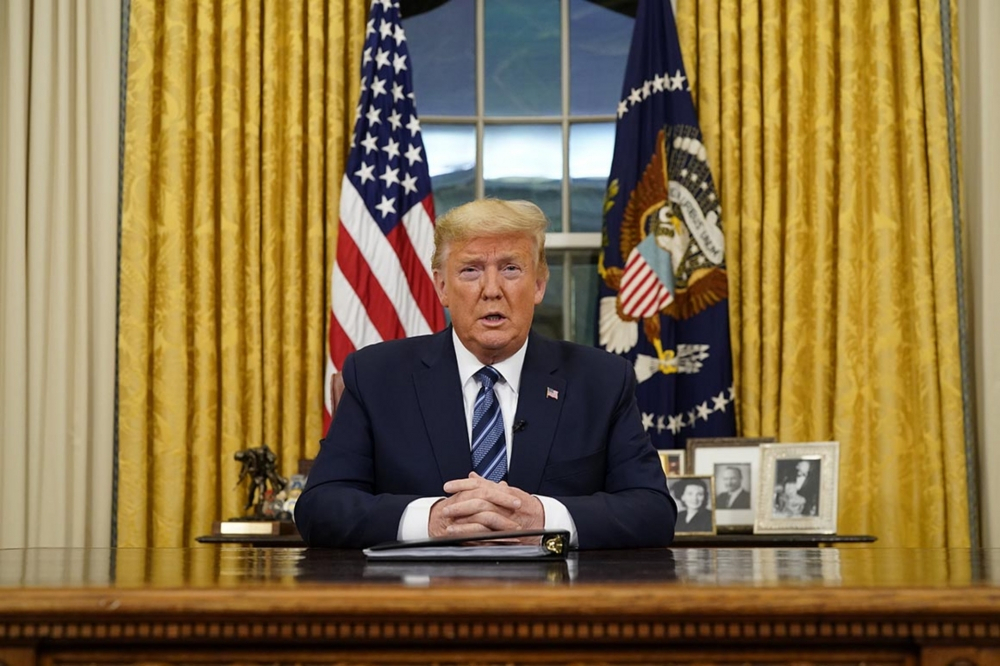
US President Donald Trump had imposed dweeping tariffs on trading partners worldwide

The Supreme Court of the United States has ruled that President Donald Trump exceeded his constitutional authority by imposing sweeping tariffs on global imports, striking down a central plank of his economic agenda.
In a 6-3 decision on Friday, the court found that a 1977 law intended to address national emergencies did not give the president the power to unilaterally introduce most of the tariffs his administration had placed on trading partners worldwide.
The ruling marks a significant setback for Trump, who has made tariffs a cornerstone of his policy platform since returning to the White House. He has argued that the measures would replenish federal coffers, revive America’s industrial base and make the global trading system more “fair” to the United States.
Under the US constitution, Congress holds the authority to levy taxes, including tariffs. Trump maintained that he was empowered to act under the International Emergency Economic Powers Act (IEEPA), a 1977 statute that allows the president to regulate international economic transactions during a declared national emergency.
During oral arguments, US solicitor general D John Sauer defended the administration’s approach, telling the court the tariffs were regulatory rather than fiscal in nature.
Several justices were unconvinced. Liberal justice Sonia Sotomayor questioned the administration’s distinction between regulation and taxation. “You want to say tariffs are not taxes, but that’s exactly what they are,” she said.
Even members of the court’s conservative wing expressed skepticism. Chief justice John Roberts noted that imposing taxes on Americans has historically been a core congressional power.

Nicole Meilak was deputy online editor at MaltaToday. She won the Most Promising Journalis...